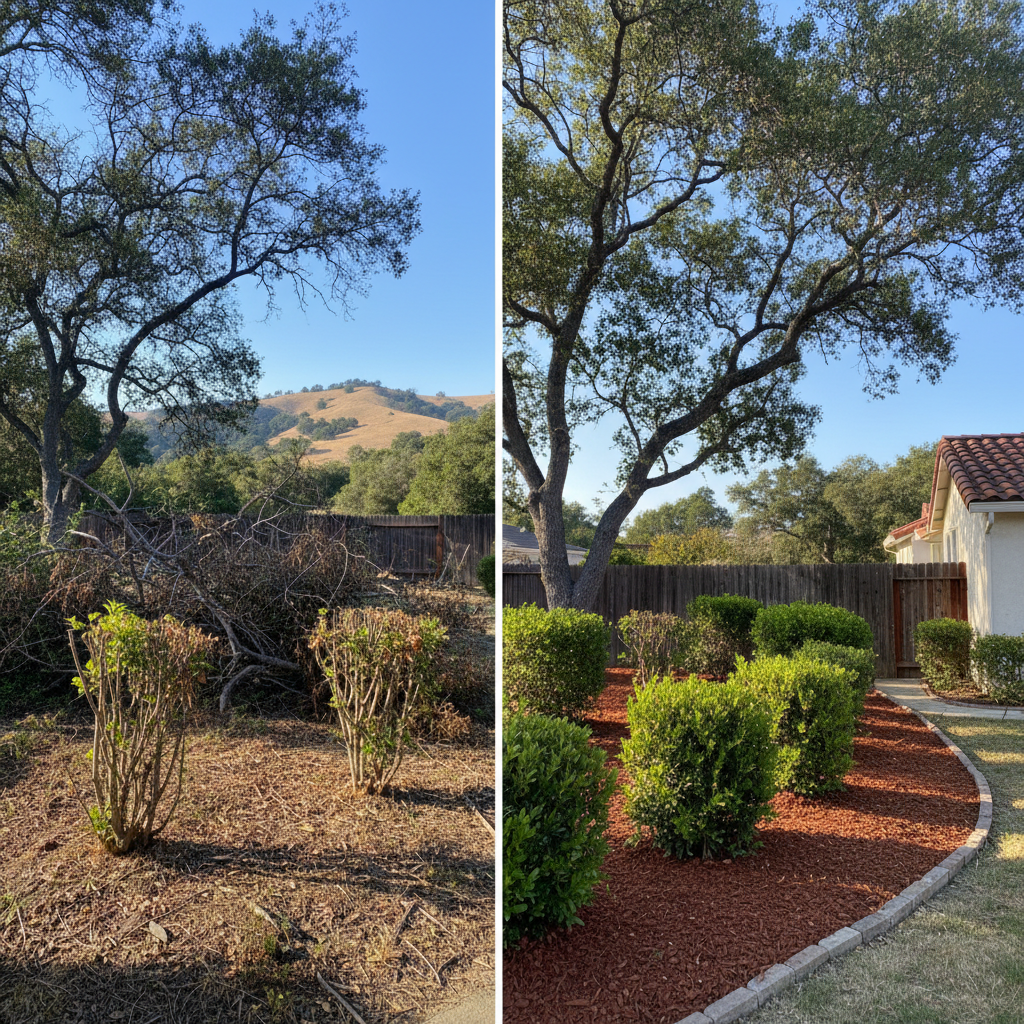
Alright, let's talk about your shrubs and bushes. You've got them, you want them to look good, and you're probably wondering what the best way is to keep them that way. Basically, there are two main ways folks approach trimming: you either shear them or you selectively prune them. I see both methods all over Menlo Park, from the tidy hedges in Allied Arts to the more natural-looking landscapes near the Stanford hills, and honestly, each has its place. But for most homeowners, one approach usually works out better.
Shearing: The Quick Cut
Shearing is what most people picture when they think about trimming. You grab a hedge trimmer, electric or gas, and just buzz the surface of the plant, shaping it into a neat, uniform box, ball, or whatever geometric shape you're going for. It's fast, it's efficient, and it gives you that immediate, crisp look.
The Good Stuff About Shearing:
- Cost: Generally, it's cheaper upfront. It takes less time and less skill than selective pruning, so the labor cost is lower. If you're doing it yourself, hey, it's a quicker job.
- Appearance: For formal hedges, you just can't beat that uniform, manicured look. It's clean, precise, and can really define a space.
- Speed: Like I said, it's quick. You can transform an overgrown hedge in an hour or two, depending on its size.
The Not-So-Good Stuff About Shearing:
- Plant Health: This is where shearing often falls short. When you only cut the surface, you're basically telling the plant to grow a dense layer of leaves right there on the outside. This can shade out the interior of the plant, leading to dead or sparse growth inside. Plus, it often cuts off flower buds, so you might not get as many blooms.
- Maintenance: Because you're only cutting the tips, the plant responds by pushing out a lot of new growth right where you cut. This means you'll need to shear more frequently – sometimes every few weeks during the growing season – just to keep that crisp look.
- Durability: Over time, a heavily sheared plant can actually get weaker. That dense outer shell can make it more susceptible to disease and pests because air can't circulate well. It can also lead to a plant that's mostly green on the outside but woody and bare on the inside, which isn't very resilient, is it?
Selective Pruning: The Thoughtful Approach
Selective pruning, on the other hand, is more like giving your plant a haircut, strand by strand. You're actually looking at the plant, identifying specific branches to remove, and cutting them back to a main branch, a bud, or even the ground. It's all about opening up the plant, encouraging natural growth, and keeping it healthy and structured.
The Good Stuff About Selective Pruning:
- Plant Health: This is its biggest advantage, hands down. By removing dead, diseased, or crossing branches, you improve air circulation and light penetration. That makes for a healthier, stronger plant. It also encourages more flowers and fruit if that's what your plant does.
- Durability: A selectively pruned plant is much more resilient. It has a stronger internal structure, better air flow, and is less prone to the problems that often plague dense, sheared shrubs.
- Appearance: While not as formal as shearing, selective pruning lets the plant show off its natural shape and beauty. It looks more organic, full, and vibrant.
- Maintenance: You don't need to do it as often. Because you're making more significant cuts, the plant doesn't push out as much immediate, dense regrowth. You might only need to prune once or twice a year, depending on the species.
The Not-So-Good Stuff About Selective Pruning:
- Cost: It takes more time and skill, so it's usually more expensive for a professional service. If you're doing it yourself, it definitely requires more knowledge and patience.
- Speed: It's not a quick job. You can't just zip through it; you really need to assess each cut.
- Appearance: If you're after that perfectly squared-off hedge, selective pruning won't give you that look. It's more about natural elegance than geometric precision.
My Recommendation for Menlo Park Homeowners
Given our climate here in Menlo Park – with those long, dry summers and the need for plants to be tough – I almost always recommend selective pruning for most shrubs and bushes. Especially for flowering plants or anything you want to grow into a healthy, long-lived specimen.
Think about it: our plants here, especially those on the west side of El Camino near the foothills, need to be tough. They deal with varying soil conditions and occasional drought stress. Selective pruning helps them develop a robust structure and stay healthy, which is crucial for thriving in our environment. Shearing can create a weak, hollow plant that's more susceptible to stress, and who wants that?
Now, if you have a very specific, formal hedge that absolutely *must* be a perfect rectangle, then shearing is your only option. But even then, I'd suggest incorporating some selective cuts periodically to open up the plant and keep it healthy underneath that manicured surface.
For the vast majority of your landscape plants, though, investing in selective pruning pays off in the long run with healthier, more beautiful, and lower-maintenance shrubs. It's what we focus on at All Things Tree when we're helping folks maintain their properties. It just makes sense for our local conditions.